The Bottom Line: If we are actively involved in trying to reach a goal, or an activity that is challenging but well suited to our skills, we experience a joyful state called “flow.” The experience of flow in both professional and leisure activities leads to increased positive affect, performance, and commitment to long-term, meaningful goals.
Do you ever find yourself so completely immersed in what you’re doing that you lose track of time? All of a sudden you look up at the clock and realize that hours have passed and you missed dinner time? Think a minute about this. When does this loss of time and total engagement typically occur for you? This could apply to a martial artist completely absorbed in perfecting a flying kick, or a violinist fiercely concentrating on a complex symphony. One may find still greater happiness working towards long-term, meaningful goals. Viktor Frankl, who survived a Nazi concentration camp, once said “ What man actually needs is not a tensionless state but rather the striving and struggling for some goal worthy of him” (Frankl, 1992).
How to Achieve Flow State:
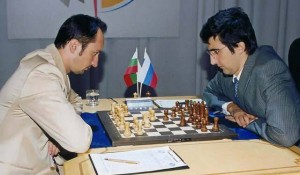
This loss of self-consciousness that happens when you are completely absorbed in an activity – intellectual, professional, or physical – is described in contemporary psychology as a state of flow. In order for a flow state to occur, you must see the activity as voluntary, enjoyable (intrinsically motivating), and it must require skill and be challenging (but not too challenging) with clear goals towards success. Hobbies, such as the image above of competing in chess, are a great example of implementing and experiencing the state of flow. You must feel as though you have control and receive immediate feedback with room for growth. Interestingly, a flow state is characterized by the absence of emotion – a complete loss of self-consciousness –however, in retrospect, the flow activity may be described as enjoyable and even exhilarating!
According to one of the scientific pioneers of flow, Hungarian psychologist Mihaly Csikszentmihalyi, also one of the founders of positive psychology there are six distinguishable factors of flow. Csikszentmihalyi began his research on flow by studying artists and creative types (Csikszentmihalyi, 1975). He noted that the act of creating seemed at times more important than the finished work itself and he was fascinated by what he called the “flow” state, in which the person is completely immersed in an activity with intense focus and creative engagement. He set his life’s work to scientifically identify the different elements involved in achieving such a state.
Csikszentmihalyi’s six factors of flow:
- Intense and focused concentration on the present moment.
- Merging of action and awareness.
- A loss of reflective self-consciousness.
- A sense of personal control or agency over the situation or activity.
- A distortion of temporal experience.
- Experience of the activity as intrinsically rewarding, also referred to as an autotelic experience.
A growing body of scientific evidence indicates that flow is highly correlated with happiness, both SWB (Subjective well-being) and PWB (Psychological well-being). Furthermore, it has been found that people who experience a lot of flow regularly also develop other positive traits, such as increased concentration, self-esteem, and performance.
Csikszentmihalyi’s Research & Other Findings on Flow
Discovery of these six factors of flow is largely due to development of the experience sampling method (ESM). Developed by Csikszentmihalyi and colleague Robert Larson, ESM requires research subjects to be provided with a beeper that beeps at random times during the day. Then, participants are asked to answer a series of questions about what they are doing and how they are feeling (Larson and Csikszentmihalyi, 1983). Over a period of time, the researcher can observe certain patterns in behavior. For example, that people are generally happier after they have eaten a meal or practiced a hobby than when at work or watching television. Much of this research has resulted in some pretty interesting conclusions about the relation between flow and happiness.
In one study, 250 “high-flow” and “low-flow” teenagers were asked to report on their feelings and activities at regular intervals (Csikszentmihalyi & Csikszentmihalyi, 1988). The high-flow teenagers on average reported more time spent on “active leisure” activities such as hobbies, sports and homework. The high-flow teenagers also measured higher levels of self-esteem and engagement. Interestingly, however, the high-flow teenagers self-reported lower levels of fun than the low-flow teenagers. Apparently, high-flow teenagers see their low-flow peers as experiencing more fun engaging in low-flow activities, such as video games, TV or socializing. However, the high-flow kids end up having greater long term happiness as well as success in school, social relationships and careers. If flow has such incredible benefits to our happiness, relationships and success, then why do people habitually choose low-flow activities? Why do people, in the moment, choose another episode of American Idol over a game of pickup basketball? One hypothesis is that the high-flow activities require more initial motivation because they do require skill and concentration. In other words, high-flow activities are work! But work that pays off. And unfortunately preference for low-flow activities, such as watching TV, could contribute to depression and low self-esteem.
Another study examined the relationship between environmental factors, flow, and happiness, again taking a sample from American teenagers (Csikszentmihalyi and Hunter, 2003). The ESM data indicated that particular activities are associated with varying degrees of happiness. School activities rate below average scores in happiness, while social, active and passive leisure activities are above average. Particular social relationships also correlate to differing levels of happiness. Being alone rates the lowest levels of happiness, while being with friends corresponds to the highest. Youth who spend more time in school and social activities are happier than those who spend less. Unexpectedly, students who spend more time pleasure reading report lower levels of happiness. Finally, feeling good about the self, excited, proud, sociable, active as well as being in the conditions for flow experience are the strongest predictors of trait happiness (long-term happiness).
Other Recent Research on Flow
While most of Csikszentmihalyi’s research has focused on American teenagers, his findings have been replicated in Italy (Csikszentmihalyi and Wong, 1989) and India (Sahoo, F. & Sahu, R., 2009). These later studies provided additional support for the universal benefits of experiencing flow. Much of the recent psychological research on flow has expanded beyond collegiate populations, now including the study of flow in the workplace and as an important component in the training regiments of elite athletes. Employees’ experience of flow on the job has often been described as spontaneous and difficult to predict, however, Ceja & Navarro discovered that a balance of enjoyment, interest, and absorption can increase flow, and subsequently employee flourishing, at work (2012). This work has been influential for companies and organizations who wish to increase employee productivity, creativity, and well-being.
Flow has also been studied in secondary education, and researchers discovered that teachers who experience more flow are more adept at applying personal and organizational resources. Personal resources can be thought of as a sense of competency in one’s work, and organizational resources include a supportive work environment and clear professional goals. Increasing educator’s goals and feelings of self- efficacy at work could lead to enriched learning environments for students, making flow an exciting subject of study for psychologists and educators alike.
Learn More about Research on Flow:
Comprehensive Reviews of Key Studies:
Comprehensive review of each key study:
Flow in Recreation
Abuhamdeh, S., & Csikszentmihalyi, M. (2012). The importance of challenge for the enjoyment
of intrinsically motivated, goal-directed activities. Personality and Social Psychology Bulletin, 38(3), 317-330.
Intro: Although preliminary, interview-based analyses of the enjoyment of intrinsically-motivated, goal-directed activities (e.g. chess, rock climbing, art making) suggested the importance of relatively difficult, “optimal” challenges, subsequent research of a wider breadth of activities suggests otherwise. Previous research has measured both perceptions of challenge as well as perceptions of skill, where perceptions of skill were positively correlated with enjoyment, but perceptions of challenge had zero-order correlations (Chen, Darst, & Pangrazi, 2001; Hektner, 1996; Moneta & Csikszentmihalyi, 1996; Shernoff et al., 2003). Two studies were conducted to defragment the relationship between challenge and enjoyment: Study 1 focused on a single activity (Internet chess) and Study 2 used the experience sampling method to examine enjoyment of challenge across a range of everyday activities. This work has been chosen as a key study in the literature as it identifies challenging activities that do and do not induce flow in daily life.
Method: Study 1 examined the relation between challenge and enjoyment in exemplary autotelic activity, where the importance of challenge was expected to manifest at both subjective and objective levels. Adult participants (N= 121, 14 withdrew throughout) played real-time online chess for a two week study period, completing an online survey of enjoyment, perceived challenge, etc. following each game. Participants were all students ranging from 6th to 12th grade.
Due to the observational nature of the design, controlling all potential confounds was impossible. Data were represented in a two-level, hierarchical structure: games (Level 1) nested within players (Level 2). Results showed a strong correlation between challenge and enjoyment for experienced chess players. Theses results suggest that variations of enjoyment for autotelic activities are more tied to process-based characteristics of the game (e.g. level of challenge, immediacy of feedback, nature of goals, etc.) rather than preceding events or outcomes of the game.
Study 2 tested the assumption of Study 1—that challenge is most enjoyable in the context of activities that are both intrinsically motivated and goal directed—by examining the challenge-enjoyment relation in daily activities that varied in both activity motivation and activity type. Data from Year 1 of the Sloan Study of Youth and Social Development was analyzed for Study 2. Participants (N= 1,109) were prompted 8 times per day for 7 days to complete and Experience Sampling Form to assess subjective and objective experience on enjoyment, perceived challenge, and perceived skill measures.
Again, hierarchical linear modeling was used to test activity of motivation as a moderator of the challenge enjoyment relationship. In these analyses, intrinsically motivated, goal-directed observations ( n = 1,145) were compared with non-intrinsically motivated, goal-directed observations (n = 1,860). Results showed that enjoyment in a challenge is moderated by intrinsic motivation: participants found more enjoyment in intrinsically motivated, goal-directed activities versus non-intrinsically motivated, goal-directed activities (e.g. tests or assignments).
Discussion: Both studies support that, for autotelic activities, perceived challenge was a stronger predictor of enjoyment than perceived skill. Results of Experiment 1 showed a strong positive correlation between perceived challenge and enjoyment (r = .68), exceeding the correlation between perceived skill and enjoyment (r = .51). These results could be explained by the cognitive evaluation theory, as the theory posits that enjoyment of challenge is rooted in perceptions of competence. Study 2 began to address the heterogeneity apparent in the relation between challenge and enjoyment across activities. Consistent with previous studies, participants chose more challenging activities when they were framed as games rather than tests or assignments. The overarching impact of this study expresses the need for further research to consider the motivational contexts of activities and the nature of the activities themselves. Such consideration will help researchers understand how to create situations in everyday life that provide the types of experiences found in flow-generating challenges.
Aherne, C., Moran, A. P., & Lonsdale, C. (2011). The effect of mindfulness training on athletes’ flow: an initial investigation. Sport Psychologist, 25(2), 177-189.
Intro: This study examined the relationship between mindfulness training and flow experiences in 13 university athletes (M= 21 years). Participants were randomly assigned to control and experimental groups, and flow experiences were assessed before and after the intervention. Mindfulness was chosen as a strategy to enhance concentration—the ability to focus on the task at hand while ignoring distractions—and better athletic performance (Moran 2009). Mindfulness differs from other cognitive control techniques by urging acceptance rather than suppression or elimination of distracting or unwanted thoughts and emotions (Bowen, Witkiewitz, Dillworth, & Marlatt, 2007; Kavanagh, Andrade, & May 2004). Emphasis on somatic awareness is another critical component of mindfulness; however, the relationship between mindfulness training and the attention strategy of association is not well-defined. Former research suggests that, when athletes employ mindfulness in a competitive setting, focus on the present moment rather that the future has a positive effect on performance. However, research examining the causal effect of mindfulness training and flow experiences in athletes is lacking. The present study hypothesized that athletes who participated in a mindfulness training program would experience greater flow that they experienced previously. It was also predicted that mindfulness-trained athletes would experience greater flow than athletes in the control group. This study has been identified as key research in the flow literature because it considers the cultivation of flow as a performance-enhancing technique for athletes. This work offers additional insight into athletic training programs that strive to better performance and well-being.
.
Method: Participants included 13 athletes (M = 21 years, SD= 1.68 years, range 19-25 years) from a University “High Performance Centre.” At the time of the study, participants had been participating in their respective sports for an average of 8.69 years (SD = 2.43). The Flow State Scale (FSS-2) was used to measure athletes’ flow experiences during training—a novel context in comparison to sport performance situations which prior research has examined. Each participant completed the FFS-2 immediately following their training session. The Cognitive and Affective Mindfulness Scale—Revised (CAMS-R) was used to measure athletes’ mindful approaches to thoughts and feelings.
Participants were stratified by sport and gender before being randomly assigned to either the experimental (n= 6) or control (n= 7) condition. All subjects completed the preliminary CAMS-R at home while the first FFS-2 questionnaire was completed following the first practice. After collecting these measures, athletes in the experimental group began mindfulness training, which featured Jon Kabat-Zinn’s literature and coauthored CD, “Guided Meditation Practices.” The CD was used to guide athletes through the six-week intervention, and four exercises were emphasized: “Breath,” “Breath and Body,” “Standing Yoga,” and “Body Scan.” Participants were each provided a calendar of their exercises to use as tools to track progress. Additionally, the athletes received daily text message reminders to complete their mindfulness exercise. Participants in the control condition were not provided any additional instruction or attention by experimentors.
At the end of six weeks, all participants completed follow up CAMS-R and FSS-2 measures. Notably, the experimental group completed the FSS-2 after a training session of similar intensity to the session of the first week to reduce unwanted error variance.
Results: Preliminary analyses featured a manipulation check using a 2 x 2 repeated-measures ANOVA, with “time” as the within-subject factor and “group” as the between-subject factor. A participant’s score on the CAMS-R served as the dependent variable for this test. This analysis did not yield a significant main effect of group, F (1,11) = .91, p = .36, or time, F (1,11) = 3.72, p > .05, but a significant group X time interaction, F (1,11) = 7.95, p < .05, partial h2 = .41. Although t-tests indicated no significant difference (p > .05) between baseline CAMS-R scores of control and experimental groups, a significant difference was observed in follow-up testing. The increase in mindfulness scores from Time 1 to Time was large (p < .01, d = 1.13, where an effect size greater than 0.8 is “large;” see McCartney & Rosenthal, 2000) in the experimental group; however, changes in mindfulness scores were insignificant for the control group (p > .05).
Main analyses featured a similar 2 x 2 ANOVA, where FSS-2 global scores represented that dependent variable. No significant main effects were observed for group, F (1,11) = 1.44, p > .05, but time did show a significant main effect, F (1,11) = 9.72, p < .05. There was a significant group x time interaction, F (1,11) = 11.49, p < .05, partial h2 = .51. As in the manipulation check, follow-up t-tests did not indicate a significant difference in the baseline FSS-2 global scores of the experiemental and control groups; however, a large difference was observed in follow-up scores (p < .05, d = 1.66). The increase in FSS-2 scores from Time 1 to Time 2 of the experimental group was large (p < .01, d = 1.56) while the increase in control scores was nonsignificant (p > .05).
Separate repeated-measures ANOVAs were then conducted for each of the nine FSS-2 subscale scores to represent the nine dimensions of flow (Jackson, 1995). Significant interaction effects were observed for two dimensions (“Clear Goals,” and “Sense of Control”), where follow-up t-tests revealed significant differences between experimental and control group scores on the “Clear Goals,” “Sense of Control,” and “Unambiguous Feedback” subscales (d > 1). Post hoc analyses of “Clear Goals” and “Sense of Control” data indicated large changes in subscale scores from Time 1 to Time 2 (p < .01, d > 1.4). Similarly, changes in “Unambiguous Feedback” scores were moderate (d = .61) and marginally significant (p = .11) in the experimental group. All changes were nonsignificant in the control group (p > .05).
Interestingly, repeated-measures ANOVAs of the other six FSS-2 subscales reported nonsignificant group x time interactions (p > .10), suggesting that mindfulness training had not produced changes in these flow dimensions.
Discussion: Results of the present study sheds light on the effect of mindfulness training on athletes’ flow experiences during competitive sport training. Both the significant increase in global flow scores and the sizeable increases in the flow dimensions of clear goals and sense of control support the effectiveness of the six-week mindfulness training intervention. Results offer promising evidence for sport psychology practitioners interested in improving flow among athletes. Limitations of the study should not be overlooked, however, as the small sample size increases the possibility of Type II error, and the omission of a distractor task for the control group . The latter fails to eliminate the possibility that the experimental group’s increases in flow scores were not, at least partly, due to effects of increased attention from the experimentors. Future directions are urged to investigate how, when, and for whom mindfulness interventions are most effective while further defragmenting the mechanisms underlying the effects of mindfulness training on athletic performance.
Partington, S., Partington, E., & Olivier, S. (2009). The dark side of flow: A qualitative study of dependence in big wave surfing. Sport Psychologist. 23 (2).
Intro: Within sport psychology, flow is regarded as an optimal state underpinning peak performance; however, experiencing flow may have undesirable consequences, including dependence on the flow-inducing experience. Csikszentmihalyi (2002) lent support to the argument of addictive properties of flow, explaining that “the self becomes captive of a certain kind of order, and is then unwilling to cope with the ambiguities of life.” Such desires can cause an individual to become driven to perpetually seek the recreation of flow. Specifically regarding flow and exercise, Hausenblaus and Downs (2002) claimed that evidence of three or more of the seven following features would qualify as exercise dependence: tolerance, withdrawal, intention effects, loss of control, conflict, time, and continuance. The present study explored the positive and negative outcomes of flow in big wave surfing–a high risk sport likely to induce flow. The work of Partington & Oliver has been identified as a key study because it considers potential maladaptive behaviors related to flow.
Method: The present study investigated the dichotomous outcomes of flow through case studies of big wave surfers (N = 15; 12 men) who completed in-depth, semi-structured interviews. Interviews ranged from 1 to 2 hours in length, and they were conducted in Hawaii and South Africa at the peak of big wave surfing season(s). The semi-structured format allowed participants to discuss their perception of risk/danger, experiences of flow, motives for both initial and continued participation, as well as the transition from small-wave surfing to larger waves.
Following transcription of the interviews, data were analyzed for emerging categories and themes. Categories were derived from the transcriptions, and, although the study does not claim direct measure, results suggest prevalence of both positive and dependent consequences of surfers’ flow experiences. A causal relationship between flow and dependence is not claimed, yet suggestion of an association is reasonable.
Discussion: Findings support the potential addictive qualities of flow; however, susceptibility to flow-induced dependence in the context of sport and leisure activities should be further examined. Some surfers interviews suggested that they were controlled by their surfing, which would be classified as a negative dependence on surfing. Others claimed to be unable to function “normally” in society due to their involvement with surfing, leading to some suggestion that individual differences in personality may make big wave surfers susceptible to dependence. The qualitative methods used in this study do not permit the establishment of a relationship; effectively, future research should consider reliable quantitative methods of assessment when assessing positive and negative outcomes of flow.
Tsaur, Yen, & Hsiao (2013): Transcendent Experience, Flow, and Happiness for Mountain Climbers Intro: Although mountaineering has become a popular form of adventure tourism, the relationship between transcendent experience and mountaineering remains unexplored. This study collected survey date from mountain climbers (N= 50) to investigate the relationships among transcendent experience, flow, and happiness. This study characterizes “transcendent experiences” as transient instances of self-actualization associated with strong positive emotions (Laski, 1961). Mature transcendent experiences deviate from this definition, as they are more accurately characterized as a self-transformational shift in one’s consciousness. Both definitions posit transcendent experience as an element of flow. The study hypothesized that transcendent experience is positively related to flow, and flow is positively related to happiness. Hypothesis 4 stated that mountaineering experiences of veterans and novices would differ. This study has been identified as a key study of flow because it identifies transcendental experience as a facet of flow occurs during some activities.
Method: After a pre-test, mountain climbers (N= 50) completed a formal onsite survey immediately upon completing a climb of over 3000m at the Shei-Pa National Park’s Syue Mountain Trail in Taiwan. 339 valid samples were collected, and flow was measured using the Flow State Scale, which contained 36 items that comprised Csikszentmihalyi’s 9 dimensions, on a Likert scale (1= “strongly disagree” to 5= “strongly agree”). Happiness was measured with the Personal Expressive Activity Questionnaire, which addressed both the eudaimonia and hedonic dimensions of happiness. Scores were, again, recorded on a Likert scale.
Discussion: Results show that the relationship between transcendent experience, flow, and happiness are significantly positive. Furthermore, findings suggest that transcendent experience is an antecedent to flow, and flow positively affects happiness. Flow has demonstrated a mediating role between transcendent experience and happiness, where high levels of flow post-climb positively correlated with increased perception of happiness. When considering differences between novice and veteran climbers, novice climbers did not exhibit gains in hedonic enjoyment from mountain climbing, but veteran climbers did show such gains.
Flow in Work and Education
Ceja, L., & Navarro, J. (2012). ‘Suddenly I get into the zone’: Examining discontinuities and nonlinear changes in flow experiences at work. Human Relations, 65(9), 1101-1127. Intro: This study examined work-related flow: a spontaneous merging of action and awareness that represents a peak experience in the daily lives of employees. Literature describes the employee process as an undulating, continuous experience, with flourishing occurring in a non-linear way. However, even the spontaneous nature of employee flourishing can be modeled, and the present study proposes to extend the current conceptualization of work-related flow by integrating the catastrophe theory and flow theory. Such integration will offer rationale behind the contexts in which flow arises, as well as provide a quantitative framework to explain the abrupt and discontinuous changes in employee flourishing. This study has been identified as significant work because it seeks to understand the nature of spontaneous flow in the workplace, which exists as a discontinuous, contextually-based phenomenon.
Method: Employees (N=60) completed flow diaries on personal digital assistants (PDAs) for 21 consecutive working days, only during work hours, to obtain a comprehensive sample of work-related activities performed by the employees. Flow diaries contained six questions, which covered various variables of flow theory: activity, perceived challenge, perceived skill, enjoyment, interest, and absorption. Responses to each question were completed on a 6-item rating scale.
Data were fitted individually during analysis, where the independent variable were skill and challenge and the dependent variables were enjoyment, interest, and absorption. Between-subjects analyses revealed significant positive correlations between enjoyment, interest and absorption: r(enjoyment/interest) = .85**, r(enjoyment/absorption) = .76**, r(interest/absorption) = .65** (** p < .01, N = 60); and at the within-person level of analysis: r(enjoyment/ interest) = .88**, r(enjoyment/absorption) = .68**, r(interest/absorption) = .62** (** p < .001, N = 6981). The R cusp package was used to analyze the fit of the cusp catastrophe model to the flow data. Results showed that the cusp catastrophe model generally provided a better fit to the data than linear or logistic models, which had been applied to participants experiencing high levels of flow (R2 = .31, p < .001).
Discussion: The results of this study were significant in their ability to model, for the first time, the merging of action and awareness described in qualitative narratives of flow literature. Additionally, results showed that high levels of flow are frequently found within discontinuous and abruptly changing environments. These findings are a novel addition to tradition linear flow models, as they suggest that employing different patterns of change (e.g. gradual, continuous, sudden, nonlinear) can complement linear relationships, enhancing employee happiness and well-being.
Collins, A. L., Sarkisian, N., & Winner, E. (2009). Flow and happiness in later life: An
investigation into the role of daily and weekly flow experiences. Journal of Happiness Studies, 10(6), 703-719. Intro: This study surveyed the levels of positive and negative affect, life satisfaction, and daily activities of older adults (N= 54; aged 70 to 89 years old, M= 77.54 years) for seven consecutive days. Although older age is a time when happiness is particularly important, research on promotive factors of happiness in older adults is lacking. Risk factors for depression and negative affect in older age remain relatively stable for an individual over time, so this study argues that examination of older adults’ daily activities and experiences is essential for understanding variations in levels of happiness. Flow was studied specifically as a factor that may increase positive affect, reduce negative affect, and boost life satisfaction in later life. This study is significant in the literature because it strives to understand how the experience of flow in older adults can increase well-being.
Method: Participants (N = 54) completed retrospective assessments of daily flow experiences and happiness, and a total of 378 daily observations were collected over a 7-day period. Participants completed the measures of affect, life satisfaction, presence of flow, and quality of flow at the end of each day. The affect measure was split for positive and negative affect, where ratings were indicated on an 8-point Likert-type scale. The Satisfaction with Life Scale was the selected measure of life satisfaction. Participants responded on a 5-point Likert scale to 5 statements, including: In most ways my life is close to ideal. To measure the presence of flow, participants were prompted to read two descriptions of flow and indicate if they had a similar experience that day.
were analyzed with hierarchical linear modeling (HLM) on two levels. Level 1 (day level) contained information about the individuals’ experiences on specific days; Level 2 (person level) variables describe individuals’ socio-demographic position and characterize experiences over the week.
Discussion:Results revealed three major findings. First, most older adults showed an understanding of the concept of flow and reported at least one flow experience over 7 days. Second, HLM analyses demonstrated that flow experience on a given day was not associated with either affect or life satisfaction; however, there was a relationship between flow quality and happiness. Higher quality of flow was positively correlated with high positive affect and life satisfaction. Finally, on the individual level, researchers observed a high number of days where flow exhibited a negative relationship with positive affect and life satisfaction. These results contradict HLM Level 1 analyses, and they suggested that people with a greater propensity to experience flow (higher # of flow days) had lower average levels of positive affect and life satisfaction. These results suggest that seeking out flow experiences as a strategy used by less happy people to make themselves feel better, but the causality of this relationship remains unclear.
Rogatko, T. P. (2009). The influence of flow on positive affect in college students. Journal of Happiness Studies, 10(2), 133-148. Intro: This studied examined whether engaging in flow-promoting activities would lead to increased positive affect (PA) in undergraduate college students (N= 57). A 2004 study by Asakawa studied flow in Japanese college students, and results showed that increased flow experience lead to increased positive affect (PA). The present study tested group assignment (to a high or low flow activity) as a mediator of the relationship between change in flow and change in PA. Previous research on flow is limited and correlational in nature, making the methodology of this study novel. This study has been identified as a key study because it discusses the causal relationship between flow experience and increased positive affect–a relationship that has previously been limited to correlation.
Method: Participants met with researchers to complete an activities sheet, recording 8-10 activities they typically engaged in during an average week and time spent doing the activity. Participants were also asked to rate the emotions they felt during the activity of a scale of 1 (never) to 10 (always) on the measures of boredom, challenged, “in the zone,” and upset. Those randomly assigned to the high flow induction group performed one of their top 3 “in the zone” activities for 1 hour in the week; participants in the low flow group performed 1 of their 3 lowest “in the zone activities” under the same conditions. The FSS-2 and PANAS questionnaires were completed before and after the flow activities.
Discussion: Results provide further support of the theory that flow leads to PA while also demonstrating that flow decreases NA. Findings also strengthen Csikszentmihalyi’s theory of nine characteristics of flow, since all but one characteristic were related to positive emotions.
Salanova, M., Bakker, A. B., & Llorens, S. (2006). Flow at work: evidence for an upward spiral of personal and organizational resources. Journal of Happiness Studies, 7(1), 1-22. Intro: The present two-wave study investigated the relationship between personal and organizational resources and work-related flow. Literature reviews of Hobfoll’s (1988) conservation of resources theory, Bandura’ social cognitive theory (1997, 2001), and Frederickson’s “broaden-and-build” theory of positive emotions were considered when forming hypotheses. Hypothesis 1 stated that personal resources (i.e. self-efficacy beliefs) and organizational resources (e.g. social support climate and clear goals) facilitate work-related flow. Furthermore, Hypothesis 2 suggested that work-related flow has a positive influence on both personal and organizational resources. This work has been identified as a significant study because it suggests that flow experience is influenced by both personal and organizational factors.
Method: Participants included 258 secondary school teachers who were asked to complete a self-report questionnaire during the academic year and a second, identical questionnaire 8 months later. Questionnaires measured organizational resources, personal resources, and flow at work.
Discussion: Results supported both hypotheses, yielding evidence of a reciprocal relationship between personal and organizational resources and work-related flow. Simultaneously, personal resources (i.e. strong beliefs about one’s own competence at work) as well as organizational resources (i.e. combinations of social support, innovation, rules, etc.) foster flow experiences over time. Regarding the second hypothesis, experiences of flow in the present influenced the gain of organizational and personal resources in the future. Interestingly, results consistently report a reciprocal nature between flow and resources, suggesting that flow can lead to optimization and competency and vice versa.
Daoist Philosophy of Flow:
According to the Hungarian psychologist Mihalyi Csikszentmihalyi, when we are deeply involved in trying to reach a goal, or an activity that is challenging but well suited to our skills, we experience a joyful state called “flow.” One may find still greater happiness experiencing “flow” in working towards long-term, meaningful goals. The Daoist philosopher Zhuangzi proposes that happiness is nothing but wuwei (no contrived action) that is, using one’s natural abilities and intuition to flow with one’s environment. When one is fully engaged with what one is doing, one begins to act effortlessly, and one’s whole mindset changes from that of fear and avoidance to that of engagement and openness.
Perhaps the most obvious connection between the modern concept of Flow and Zhuangzi is found in his description of skilled artisans such as butchers and cicada-catchers, whom we could call “blue collar sages.” One of the most celebrated examples recounts the virtuosity of butcher Ting. Ting is cutting up an ox for his Master Wen-Hui, and his activity is described in the following way:
At every touch of his hand, every heave of his shoulder, every move of his feet, every thrust of his knee–zip! zoop! He slithered the knife along with a zing, and all was in perfect rhythm, as though he were performing the dance of the Mulberry Grove or keeping time to the Ching-shou music( The Collected Works of Chuang Tsu, trans. Burton Watson 1986, p.50)
When Ting is asked by his Master how he could achieve such skill, Ting responds:
What I care about is the Way, which goes beyond skill. When I first began cutting up oxen, all I could see was the ox itself. After three years I no longer saw the whole ox. And now– now I go at it by spirit and don’t look with my eyes. Perception and understanding have come to a stop and spirit moves where it wants.
Ting goes on to explain how this state of mastery is achieved:
However, whenever I come to a complicated place, I size up the difficulties, tell myself to watch out and be careful, keep my eyes on what I’m doing, work very slowly, and move the knife with the greatest subtlety, until– flop! the whole thing comes apart like a cloud of earth crumbling to the ground. I stand there holding the knife and look all around me, completely satisfied and reluctant to move on, and then I wipe off the knife and put it away.
Here we see all the elements of the Flow described quite succinctly. Ting has a clearly defined goal in mind: to chop the ox carcass with a minimum of effort and least wear and tear on his cleaver. He is completely immersed in the activity of butchering with no space in mind for any other thought or feeling. Ting describes the stages he went through in order to achieve mastery of his skill. The attitude that binds these stages as a thread is single-minded focus and intention. The allusions to rhythmic movement and dance clearly indicate that he is going through an ecstatic experience. And at the end of the activity he describes himself as “completely satisfied.” Ting’s reference to “a complicated place” indicates that the Flow state is achieved only after facing increasing challenge and the development of new skills.
Zhuangzi intimates that the Flow-like experience can extend beyond the specific act of butchering to become a continuous state (this is similar to Csikszentmihalyi’s concept of the “autotelic personality”). After Master Wen-Hui hears Ting’s explanation, he proclaims, “I have heard the words of Butcher Ting and have learned how to care for life.” It is obvious to Wen-Hui that Ting is not just giving us a recipe for how to butcher an ox: he is giving us a recipe for life itself. This idea of Flow as a kind of “caring for life” is a major theme in Robert Pirsig’s popular work Zen and the Art of Motorcycle Maintenance, for example when he writes, “When you’re not dominated by feelings of separateness from what you’re working on, then you can be said to “care” about what you’re doing. That is what caring really is: a feeling of identification with what one’s doing.” Zhuangzi uses the metaphor of the “mirror” to explain this: by removing the interference of the self, your mind becomes a perfect reflection of the concrete situation you are in.
While Zhuangzi can legitimately be taken to be a precursor of the modern concept of Flow, it is equally important to note some of the differences. Csikszentmihalyi prefers to use the language of “control:” the ego learns to master the external world in the conquest of a challenging skill. Zhuangzi on the other hand uses the language of “letting be” ( wu wei): one learns not to interfere with the Way of things. We believe, however, that these two different perspectives are complementary aspects of the Flow experience. While Csikszentmihalyi draws attention to the strength and control that is achieved within Flow, or its Yang aspect, Zhuangzi points to the effortlessness of the state, its Yin aspect.
Annotated Bibliography:
Interested in learning more about flow? Click on each citation to read the abstract of each study.
Abuhamdeh, S., & Csikszentmihalyi, M. (2012). The importance of challenge for the enjoyment of intrinsically motivated, goal-directed activities. Personality and Social Psychology Bulletin, 38(3), 317-330.
Ceja, L., & Navarro, J. (2012). ‘Suddenly I get into the zone’: Examining discontinuities and nonlinear changes in flow experiences at work. Human Relations, 65(9), 1101-1127.
Marr, A. J. (2001). In the zone: A biobehavioral theory of the flow experience. Athletic Insight,3(1).
Selection of Key Studies on Flow:
In addition to the studies above, many other studies are discussed at length in the “Comprehensive Reviews” section of this correlate. We chose key articles from the literature that offer new perspectives on Csikszentmihalyi’s initial findings, and articles were then divided based on their study of flow in recreational or professional and educational contexts. Studies of flow in recreation discusses challenging activities that do and do not induce flow; how and why flow may enhance athletic performance; potential transcendental experiences associated with flow; as well as maladaptive behaviors associate with too much flow. Research of flow in the workplace and education spans the following topics: how spontaneous flow occurs at work; how older adults benefit from flow; the link between flow and increased positive affect in college students; and the relationship between personal resources, organizational resources, and flow.
Our Related Articles
You can enjoy reading our other articles related to flow and happy people’s habits.